Based on whether the IT is doing the right thing (aligned with business goals) and whether it is doing it right (effective), the researchers divided the companies in four groups:
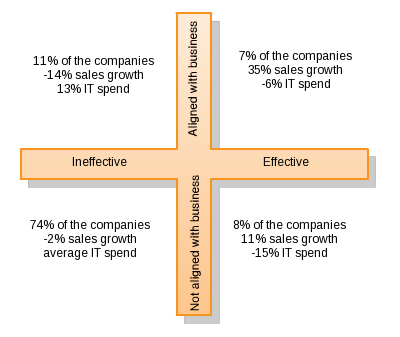
The figures in the picture are comparing to the average and over three years - so, for example, the group that has IT aligned with the business but not effective has 14% less sales growth than the average of all surveyed companies, but they spend 13% more than the average on the IT. On another hand, the group that has a mismatch in what IT does and what the business wants, but with effective IT, spends 15% less on IT then average but sees 11% more sales growth than the average over three years.
A very important note from Allan’s talk is that the transition from the top-left corner into the top-right corner is virtually impossible, unlike the transition from the bottom right corner into the top-right corner. Doing the wrong thing but doing it right turns out to be better than doing the right thing poorly.
For more information, see Allan Kelly’s post on this topic.